How to Reduce Fee Defaulters in Private Schools: A Practical Recovery Plan
In many Pakistani private schools, a significant share of each month’s fee arrives late, and some of it never arrives at all. The school still has to pay teachers, rent and utility bills on time. Fee defaulters are rarely a parent problem alone; they are usually a process problem: unclear challans, reminders that come too late, payment that is inconvenient, and follow-up that depends on one busy person remembering.
The good news is that a consistent process, supported by the right software, can bring the defaulter rate down noticeably within a term. Here is a practical plan.
Step 1: Make every challan clear and correct
Parents delay payment when they are unsure what they owe. Every challan should show, without ambiguity:
- This month’s fee heads (tuition, transport, exam or other charges) and any concession applied.
- Arrears from previous months as a separate line, so nothing appears “hidden”.
- The total payable, the due date, and the amount payable after the due date.
- Where and how to pay: bank account, Easypaisa or JazzCash details, and the school office.
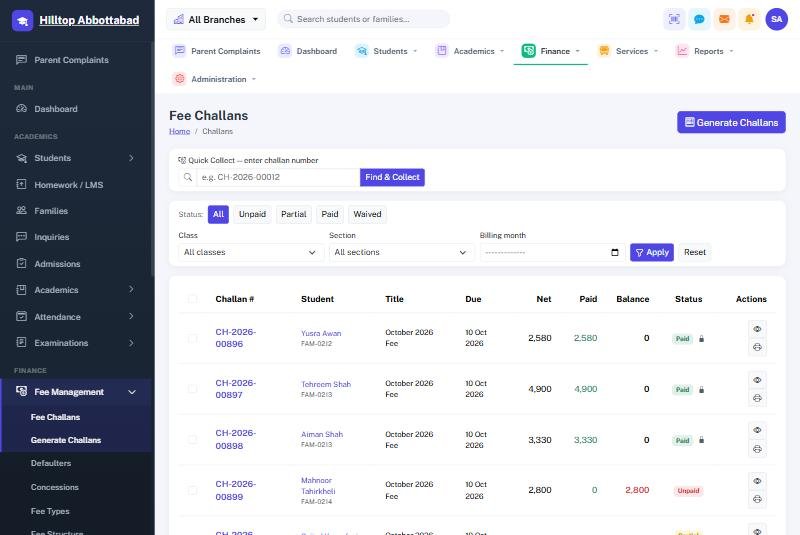
Errors destroy trust. If one sibling discount is missing or an old payment is not reflected, the parent will question every challan after it. Generating challans automatically from the fee structure, concession rules and payment history removes most of these mistakes.
Step 2: Remind early, not only after the due date
Most defaulters are not refusing to pay; they forget, or the date clashes with their salary. A simple reminder schedule works well:
- Challan day: SMS or app notification that the new challan is ready, with the amount and due date.
- Three days before the due date: a polite reminder.
- Day after the due date: a reminder showing the late fee now applicable.
- Two weeks overdue: a personal call from the office, and an invitation to meet if needed.
Writing reminders in Urdu as well as English noticeably improves response from many families. With SMS automations, these messages go out on schedule without anyone remembering to send them.
Step 3: Make paying easy
Every extra trip to a bank branch is a reason to delay. Offer as many convenient channels as you can manage: bank deposit with the challan, mobile wallets such as Easypaisa and JazzCash, and payment at the school office, including during school events and parent-teacher meetings. Record every payment against the challan immediately so the parent receives a receipt and the defaulter list stays accurate. Our article on Easypaisa and JazzCash fee payments explains the options.
Step 4: Use a live defaulters list, not a month-end register
A defaulter list that is prepared once a month is already out of date. You need to see, at any moment:
- Who owes, filtered by class, section, branch and amount.
- How long each amount has been outstanding (current month vs. older arrears).
- Families with several children, where one conversation can settle several accounts.
- Contact numbers, so the office can call or message directly from the list.
Review the list every week with the principal or accountant, agree who will follow up with which families, and note the outcome. What gets reviewed gets collected.
Step 5: Be firm, fair and consistent
Write a short fee policy and share it at admission and at the start of each session: due dates, late fee, and what happens after 30, 60 and 90 days. Then apply it the same way to every family. Inconsistent exceptions are noticed quickly by other parents.
At the same time, recognise genuine hardship. A family facing a temporary difficulty is better offered an instalment plan or an approved concession, recorded properly in the system, than lost to another school. Avoid public embarrassment of children; conversations about fees should always be with parents, in private.
Step 6: Tackle arrears before the new session
Old arrears are the hardest to recover. Before promoting students to the next class or issuing results, review every family with outstanding balances and agree a clear settlement plan. Many schools tie the collection of result cards or the new admission confirmation to clearing, or agreeing a plan for, the outstanding amount, as long as the policy was communicated in advance.
Step 7: Measure what improves
Track a few numbers every month: the percentage of fee collected by the due date, the total outstanding, and the number of families more than 60 days overdue. When you change something, such as adding an early reminder or a new payment channel, you will see whether it worked.
How School Smart ERP helps
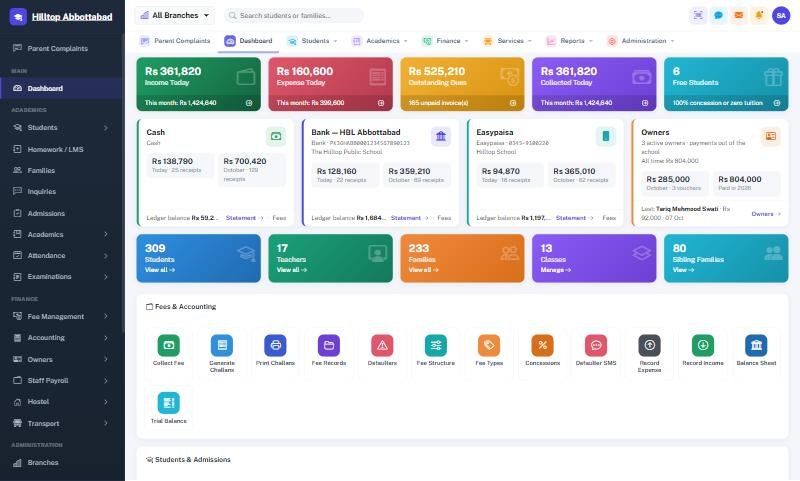
School Smart ERP generates monthly challans with arrears, concessions and sibling discounts applied automatically; sends Urdu and English SMS automations for new challans, due dates and overdue fees; shows a live, filterable defaulters list by class, section and branch; records partial payments with receipts; and provides fee collection and defaulter reports for the owner across all branches. It even keeps the fee counter running offline when the internet is down.
If unpaid fees are holding your school back, book a free demo and we will show you the full fee cycle with your own fee structure.
Frequently asked questions
How can a school reduce fee defaulters?
Issue clear and correct challans that show arrears separately, send reminders before and after the due date by SMS or app, offer convenient payment channels, review a live defaulters list every week, and apply a written fee policy consistently to every family.
When should a school send fee reminders?
A practical schedule is: when the challan is issued, three days before the due date, the day after the due date with the late fee, and a personal call after two weeks overdue.
Should schools charge a late fee?
A modest, clearly communicated late fee encourages payment on time. It should be stated in the fee policy at admission, shown on the challan as the amount payable after the due date, and applied consistently.
How do we recover old arrears?
Review all families with outstanding balances before the new session, agree a written settlement or instalment plan with each, record it in the system and follow up on the agreed dates.
Run your school the smart way
Book a free demo of School Smart ERP for your school or college.
Request a Free Demo